

The WordPress ecosystem has long been recognized as a powerful and influential factor in democratizing the web.
However, there have always been some tensions between WordPress co-founder Matt Mullenweg and WPEngine, a leading managed WP hosting company. Recently, this dispute has reached a new level, even banning hosting providers from accessing core WordPress resources.
But how did this “WordPress vs WPengine” drama unfold? And what does it mean for the future of both WordPress and WPengine?
Let’s dive into this article and find out.
A Brief History of WordPress and WPEngine
Before diving into the controversy, it’s essential to understand the history of WordPress and Matt Mullenweg’s role.
WordPress was launched in 2003 as an open-source content management system (CMS) by Mullenweg and Mike Little. Its mission was simple – to provide users with a free and accessible platform to create websites.
Over the years, it grew exponentially, now powering over 40% of the web. (Source: WPZOOM)
Mullenweg, who co-founded Automattic (the company behind WordPress.com), has always been a strong advocate of open-source principles.
He champions the idea that the core web building software should remain free. And with that, the ecosystem should flourish through WordPress plugins, themes, and managed hosting.
Conversely, WP Engine was founded in 2010 by Jason Cohen. It has become one of the premier managed WordPress hosting services.
Unlike traditional hosting, WP Engine offers tailored solutions specifically designed for WordPress users. Thus, emphasizing speed, security, and scalability. And by doing so, WP Engine gained a significant market share, catering to both enterprise clients and smaller businesses.
Though WPEngine doesn’t directly compete with WordPress itself, it operates within the WordPress ecosystem.
WordPress Vs WPEngine: What’s the Difference?
The difference between WordPress and WP Engine is quite simple.
WordPress is like a toolbox that builds any kind of website – completely free and flexible. But you do all the hosting, setup, and maintenance on your own.
Think of it like getting all the materials to build a house yourself.
WP Engine, on the other hand, is like hiring a specialized contractor for your WordPress house. They handle the hosting, security, and speed optimization for you, making it much easier. But that comes at an extra cost for the convenience.
In short, WordPress gives you complete control, while WP Engine provides a hands-off, managed experience for your WordPress site.
The Roots of the WordPress vs WPEngine Drama
There’s a saying, you need two hands to make a clap. And that is true for the ongoing WordPress vs WPEngine drama as well.
Let’s see how:
Matt Mullenweg’s Philosophy on Open-Source
As previously mentioned, Mullenweg’s core philosophy is that open-source software must remain free and accessible.
He believes that commercializing certain aspects of the WordPress ecosystem can inhibit innovation and limit the inclusivity that open-source stands for.
WP Engine’s Business Model and Silver Lake Capital
WP Engine’s strategy is deeply rooted in monetizing its expertise and infrastructure around WordPress. The company charges for convenience, performance optimization, and premium support.
These aspects are highly valued by developers and businesses.
However, the conflict evolved after the entry of a private equity firm when they took over WPengine. In 2018, Silver Lake Capital took over the majority ownership of WP Engine. These equity firms are usually more profit-driven, focusing purely on maximizing returns rather than fostering community growth. (Source: Silverton Partners)
Due to their profit-driven attitude, WPengine started marketing their service aggressively and started making money out of WordPress’s reputation. And that’s not our words, the CEO of WordPress himself said that recently.
Read ahead to know what he said:
Matt’s Stance on WP Engine and Its Ownership
During Matt’s interview at WordCamp US 2024, he strongly criticized WP Engine’s contributions, or lack thereof, to WordPress core development.
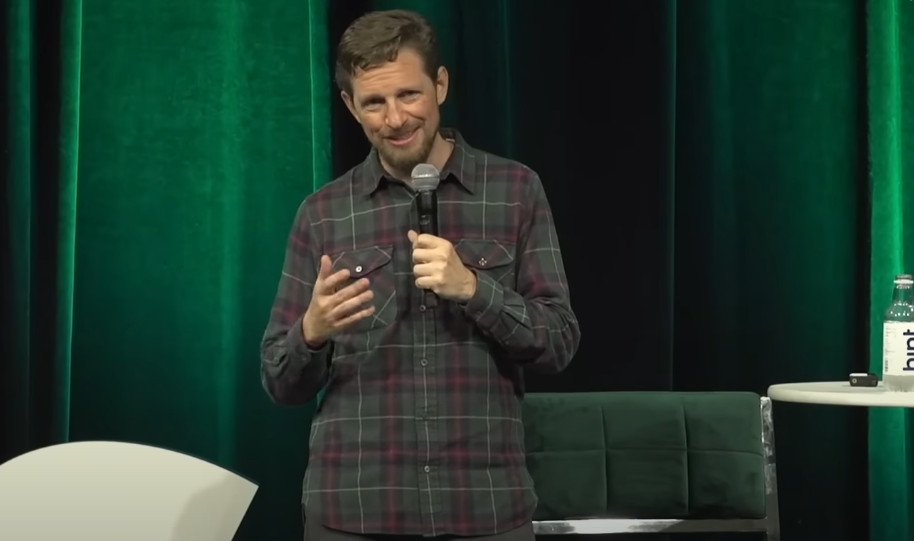
He further stated in his personal blog that WPEngine contributes approximately 47 hours per week to the Five for The Future project. Whereas Automattic, a smaller company in terms of headcount, contributes around 3,786 hours weekly.
FYI, Five for The Future is an initiative by the WordPress Foundation. It encourages third-party organizations to contribute 5% of their resources to WordPress development.
Automattic also mentioned in their blog post that WPE hasn’t even provided a $1 to the WordPress Core despite repeated requests for contributions.
And his concerns don’t end there!
He called out WPE as a “cancer to WordPress” as the host has disabled the revision feature by default to save money.
He believes this practice goes against the core promise of protecting user data.
Mullenweg also talked about the concerning history of the Silver Lake equity firm(with $102 million in assets under management). He implicated how it can negatively impact the WPengine users’ experience in the future.
Hence, his suggestion to people was to vote with their wallets and switch to a different hosting provider.
Not to mention, one of his biggest arguments against WP Engine is that many people can get confused with that name and branding. According to Mullenweg, the company has built a half-a-billion-a-year business by confusing consumers with their commercial use of the WordPress trademarks.
He even went as far as to suggest that even his mother gets confused with WP Engine as an official service from WordPress.
To clarify it even further, WordPress released an official newsletter saying WP Engine is not WordPress.
WordPress vs WPengine – The Legal Battle
After all the harsh comments from Matt during WordCamp, WPengine sent a cease-and-desist letter to retract his comments.
The company also conveyed that their use of the WordPress trademark is under fair use and criticized Mullenweg for his approach against WP Engine for licensing.
In response, the WordPress team sent their own cease-and-desist notice to WP Engine.
They said that the hosting provider has broken the WordPress and WooCommerce fair usage rules and has created confusion among users with their branding and marketing.
The Impact on the WordPress Community
After both parties shared cease-and-desist letters and came to no conclusion, Automattic announced that they’ve banned WPEngine from accessing resources from WordPress.org. (Source: WordPress Blog)
Megan Fox, a spokesperson from Automattic, stated that the block was due to trademark violations.
This means WPE users won’t be able to update or install plugins and themes from the WP dashboard anymore. It broke a lot of websites that use WP Engine as their hosting provider and raised WordPress security concerns.
WPEngine then accused Matt of abusing his powers and criticized him for putting thousands of users in such a vulnerable state.
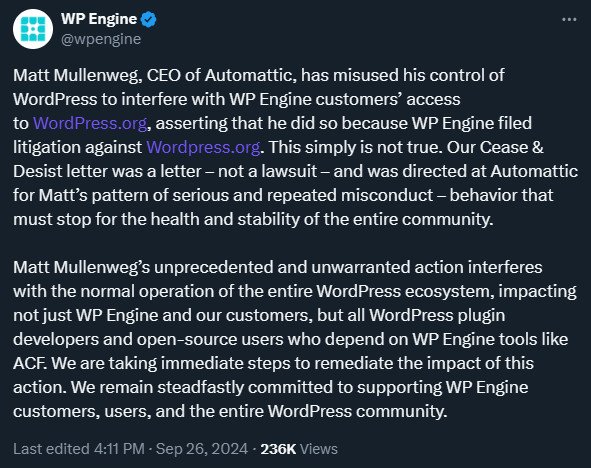
They stated that Automattic’s reasoning for the subsequent ban was invalid as WP Engine didn’t send any litigation against WordPress. They simply sent a letter, not a lawsuit.
Later on, Matt decided to temporarily remove the block and give WPEngine until October 1st to create their own solution or resolve the conflict.

However, Mullenweg hasn’t changed his stance on legally fighting against WP Engine or Silver Lake Capital in court.
Divided Opinions and Feedback
Right after Matt talked about the whole WPE thing in WordCamp US 2024, people left the event in a weird mood. The venue immediately picked sides when Matt started name-dropping WPE and its parent company.
And the divided opinions are still continuing to flood the social media platforms.
Many people are siding with Matt about the confusing WP trademark and demanding that WPE contribute more.
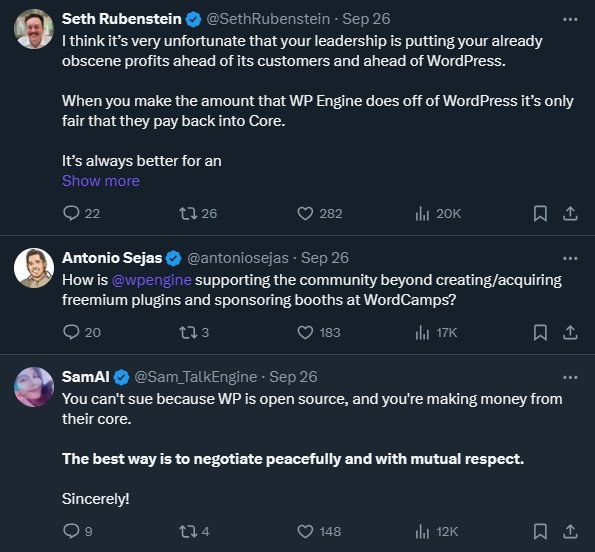
Some also share the same concern for the Silver Lake Capital.
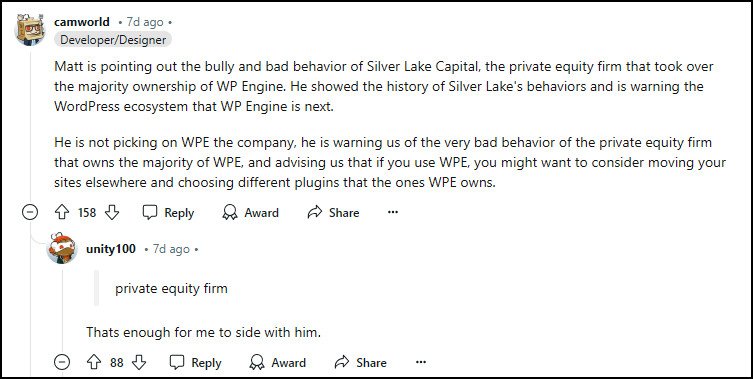
On the flip side, others are accusing Matt of sullying the WordPress’ name and asking him to step down due to abusing his powers.
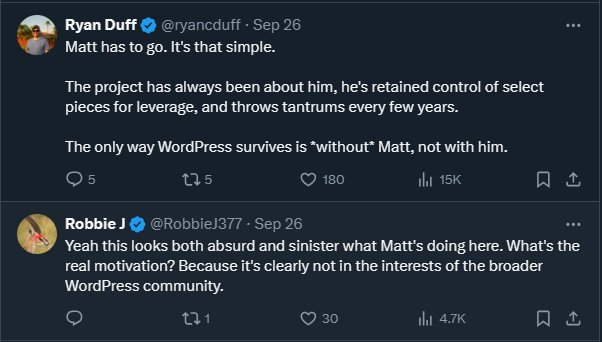
Meanwhile, many are on the same page with Matt regarding the WPE concerns but think his actions were not justified. Especially since the plugins and themes are under the open source license and the WP is not covered by the WordPress trademarks.
Heck, they even had to update their trademark policy page about the ongoing issue of the WP abbreviation.
Future of WordPress and WPengine Users
The WordPress vs WPEngine debate has raised broader tensions within the open-source community as a whole.
Despite Matt clarifying that this legal battle is only against WPE for the licensing trademark, the WordPress community is still worried about its implications.
Many developers and hosting providers feel like this trademark licensing could be used against them. After watching the WPE ban, they are worried about using a commercial open-source platform where their access can go away in the blink of an eye.
Others want proper clarification from Automattic on how to use or not use “WordPress.”
Regardless, this drama may lead to increased pressure on companies that rely heavily on the platform to contribute more directly to its development. It could also spark discussions about licensing and governance between commercial interests and open-source ideals.
Bottom Line
The drama between Matt Mullenweg and WP Engine is far from over. As the WordPress ecosystem continues to evolve, these issues will likely resurface. It might also prompt ongoing conversations about the role of commercial entities in open-source projects.
Anyway, that’s it for today.
Are you on Team Matt or Team WP Engine? Let us know in the comment section below and stay connected to our social platforms to get updated!