

In just a few years, the way people search for information has shifted dramatically. Ranking on the traditional Google SERP is no longer enough.
Showing up in AI-generated answers and overviews is becoming the new standard.
To evaluate which content is trustworthy and suitable for these AI-driven results, Google relies on the E-E-A-T framework.
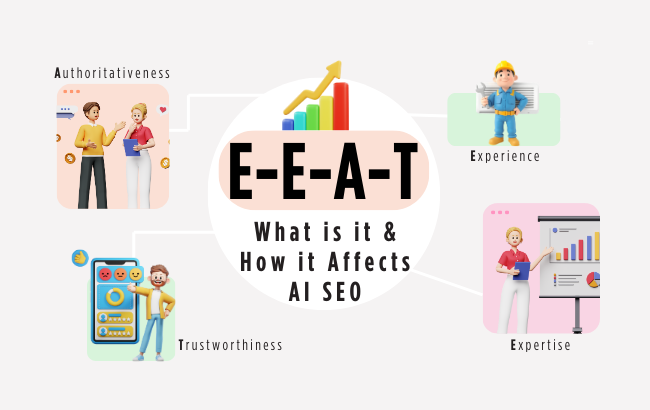
But what exactly is this Google EEAT in SEO, and how is it important for AI SEO in 2026?
Let’s dive into this article and find out.
What is Google EEAT in SEO?
The acronym E-E-A-T stands for Experience, Expertise, Authoritativeness, and Trustworthiness. Google uses this framework to determine whether a website or content is reliable and helpful to users.
It’s part of Google’s Search Quality Rater Guidelines, the handbook used by real human evaluators(called Quality Raters) to review and assess the quality of pages for search results.
Although E-E-A-T is not a direct ranking factor (like page speed or backlinks), it influences how Google’s systems assess the overall quality of a website or piece of content.
E-E-A-T is comprised of four components.
Here’s a breakdown of these elements of Google EEAT in SEO with examples:
1. Experience
Quality content often demonstrates the author’s firsthand experience with the subject matter.
Google wants to know that the person behind the content has actually done, used, visited, tested, or lived through what they’re describing. This helps prove that the suggestions are tried and tested. It also validates any unique opinions and authenticates insights.
This is especially important for content like product reviews, travel guides, tutorials, or anything where practical, real-world knowledge adds depth and reliability.
For example, let’s take a look at GSMARENA’s iPhone 17 review.
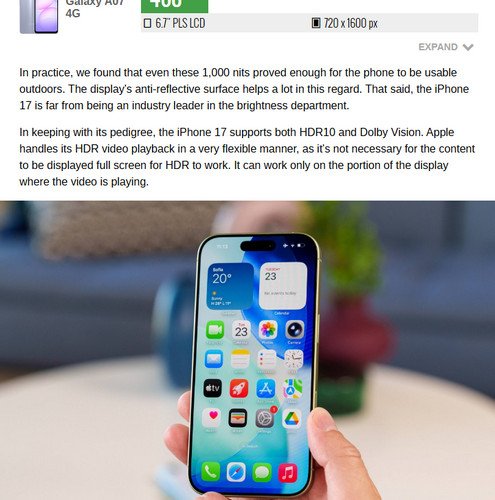
The author talks about their own experiences & opinions about the device. They also provided unique photos to prove that they’ve actually used the device.
2. Expertise
Expertise focuses on whether the authors have topical expertise. In other words, Search Quality Raters must determine if the author has the knowledge, qualifications, and credentials to give reliable information.
Expertise matters most in fields where accuracy is critical: finance, health, legal topics, or technical side.
For example, this blog post from WebMD is reviewed by a medical doctor in the same field(a pediatrician).
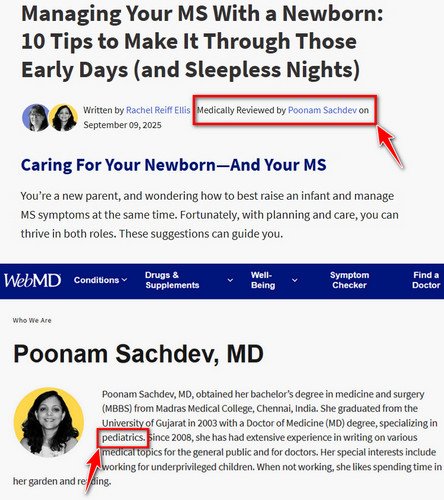
This ensures Google that the advice is coming from someone qualified to talk about it.
Note: Don’t confuse expertise with experience. For example, when you want to know from a professional how to save money, that’s expertise. When you want to know a real-life example of a money-saving strategy from a professional, that’s experience.
3. Authoritativeness
Authoritativeness represents the overall reputation of your website. It reflects how others in the industry, especially experts, view your website or brand.
If people consider you a go-to source, cite your work, reference your insights, or link to your content, it signals authority. Google uses these external signals to determine whether your content carries weight.
For example, our team at newWebber dug through several prominent sites. They found that Zillow, a well-regarded site, has backlinks from more than 234k domains, including big-name brands like Adobe and Amazon.
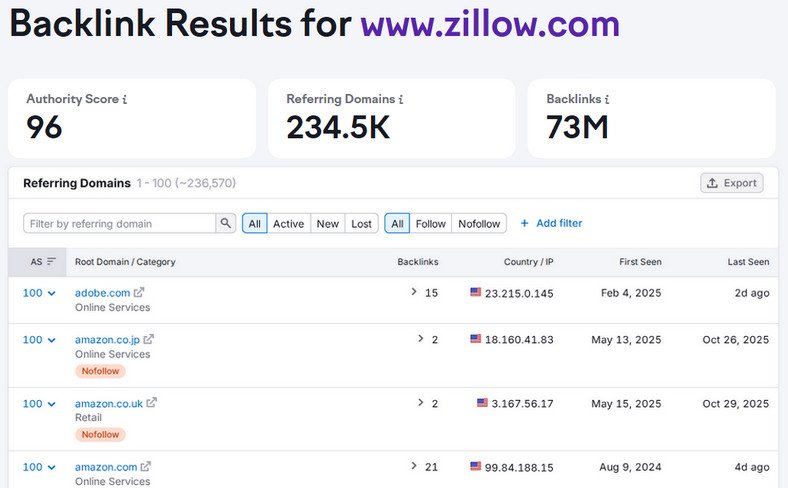
Authoritativeness grows over time as more credible websites point to or validate your work.
4. Trustworthiness
Trustworthiness is the foundation of Google EEAT in SEO. It’s about whether users can rely on your content, whether your website is safe, and whether you communicate transparently.
Trust can be demonstrated in many ways, such as citing reliable sources, providing unique & authentic photos, being clear about who wrote it, etc.
Even design and user experience can also play a role. For example, pages filled with intrusive ads or sketchy writing can undermine trust.
For a better understanding, let’s take a look at the Annual Credit Report website.
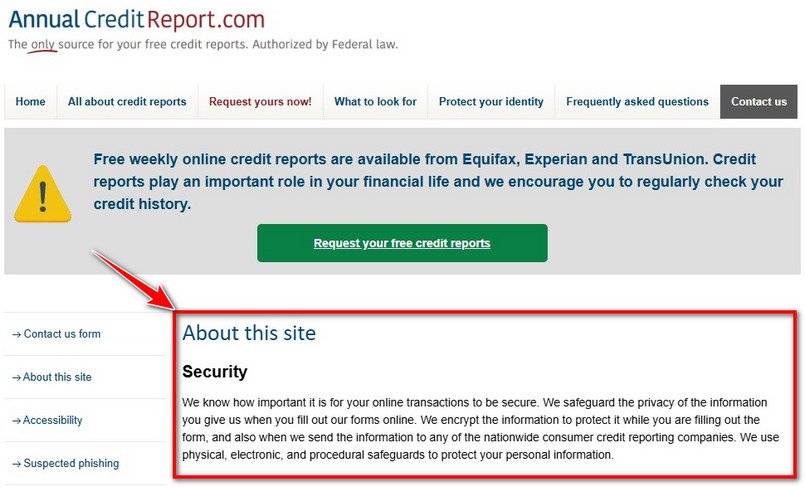
They provide free credit reports under authorization from the FTC(Federal Trade Commission). The site also takes many measures to ensure the safety of its users.
Such credentials not only protect visitors from potential harm but also give them confidence in the content/website. Google’s Quality Raters use these types of credentials to determine whether the content, the creator, or the website is trustworthy for the citing.
Trustworthiness is particularly important for YMYL (Your Money or Your Life) topics, such as instructions on how to treat a snakebite or prescribing drugs.
Basically, in sensitive topics where your health or your money can be at risk, trust is a major factor that Google considers for its SERP.
Why is Google E-E-A-T Important for AI SEO?
AI-powered search, like Google’s AI Overviews, relies on summarizing, synthesizing, and interpreting content from across the web. That means the quality of content chosen as source material matters more than ever.
Google, one of the leading search engines, is constantly making improvements to its search products to show highly relevant results.
Each of these changes undergoes rigorous evaluation. This includes hiring human testers to evaluate search results using the E-E-A-T framework.
As a result, E-E-A-T has become the backbone of AI SEO.
Here’s how Google EEAT in SEO affects AI SEO as well:
- Through the aforementioned framework, Google prioritizes trustworthy content. To prevent misinformation, Google’s AI Overview favors sites with proven trust signals. If your brand lacks Google EEAT foundations, you’re less likely to be included.
- Experience and authenticity carry more weight than ever. Generic, surface-level content can easily be replaced by AI-generated alternatives. That’s why AI platforms consider firsthand insights, case studies, expert opinions, and unique perspectives to highlight in their search results.
- As previously mentioned, AI Overviews rely on authoritative sources. Hence, if your website is cited frequently across the web, you become a natural candidate for AI-generated answers.
- Thin or low-quality content is more likely to be filtered out by AI safety and quality thresholds.
- As misinformation grows, users depend on credible answers. Google EEAT in SEO helps match that expectation.
Now, it is worth mentioning that E-E-A-T is not a part of Google’s ranking algorithm. However, it is one of the many important ranking factors that can help boost your page for AI searches.
How to Fulfill Google EEAT in SEO
Improving E-E-A-T takes strategic, ongoing effort. If your pages are properly optimized for it, you’ll notice a significant impact on search visibility, especially in an AI-driven landscape.
Here are the most effective ways to demonstrate Google EEAT in SEO for your brand:
1. Create Genuinely Helpful, Experience-Backed Content
Focus on content that actually solves user problems and reflects your real experience in the subject.
Share insights, tests, comparisons, case studies, or personal observations; anything that shows you’ve worked with the topic firsthand.
Brands that consistently provide useful, informed content naturally build authority over time.
2. Establish Clear Editorial Standards
Develop a quality process that ensures everything you publish is accurate, readable, and trustworthy. This includes:
- Fact-checking and proofreading by someone other than the writer.
- Clear guidelines for tone, structure, and sourcing.
- Regular content updates.
- A defined process for reviewing expert topics.
- Transparent attribution and citations.
Editorial consistency signals that your site values accuracy and reliability.
3. Strengthen Your Brand Reputation
Your brand’s public image affects how trustworthy your content appears, both to users and Google. Positive exposure can come from:
- Digital PR campaigns
- Collaborating with industry influencers
- Publishing guest articles on reputable websites
- Staying active and helpful on social platforms
- Earning quality backlinks through valuable content
A brand with a strong, respected presence is more likely to be seen as authoritative.
4. Highlight the People Behind Your Content
Make it clear who creates your content, and why readers should trust them. Include author names, detailed bios, credentials, and links to their past work. This demonstrates expertise and accountability.
For example, each article on our NewWebber website has an author bio detailing their expertise and experience in the relevant fields.
If a topic requires specialized knowledge, involve qualified team members or consult external experts to ensure accuracy.
5. Rely on Accurate, Credible Sources
Show your work. Use reputable sources, cite them properly, and avoid unverified claims.
For instance, many of our blog posts include credible sources linked to any specific information we provide.
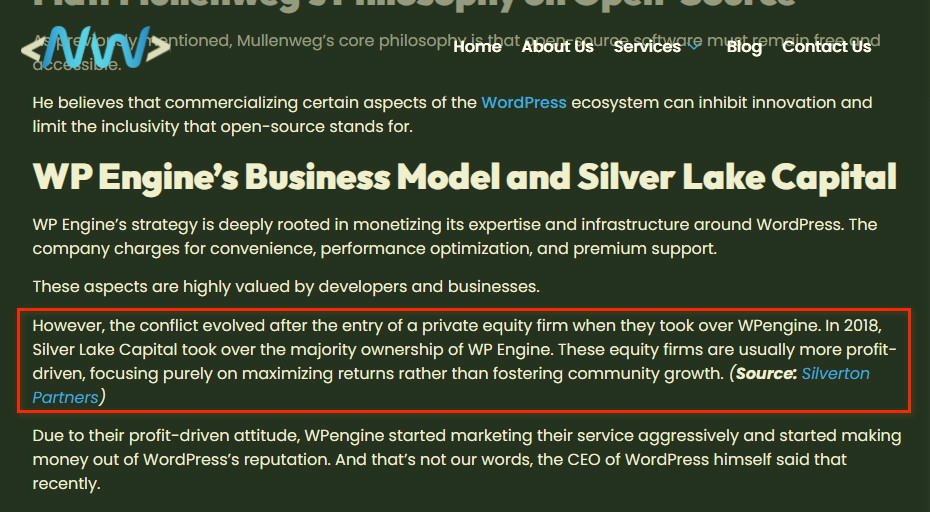
Linking to studies, industry research, or official data helps reinforce trust and shows readers (and Google) that your information is grounded in fact.
6. Incorporate User-Generated Content
Feedback and insights from real users can strengthen your brand’s credibility. Reviews, photos, testimonials, Q&A sections, and community discussions all provide proof that people engage with and trust your business.
UGC also adds diverse perspectives that can help future visitors.
Encourage it through review prompts, community features, or simple submission tools.
Additionally, using security features such as the HTTPS protocol and an SSL certificate also ensures the trust factors of your site.
What’s the Difference Between E-A-T and E-E-A-T?
When Google first introduced its Search Quality Rater Guidelines in 2014, the framework focused on Expertise, Authoritativeness, and Trustworthiness(E-A-T).
In 2022, Google expanded the framework by adding another “E” for Experience, changing the name to E-E-A-T.
This update emphasized the value of firsthand knowledge. The shift reflects Google’s growing focus on authentic, helpful content that feels grounded in real-world insight.
The core idea remains the same: highlight expertise, build authority, and earn trust. The addition of “Experience” simply strengthens what high-quality content should already aim to deliver.
Final Thoughts
E-E-A-T is crucial for building genuine trust and credibility in AI search results. It’s not something you fix overnight; it’s a long-term approach that grows stronger as your content, reputation, and expertise develop.
That’s it for today. If you have any queries, let us know in the comments below.
Have a nice day!